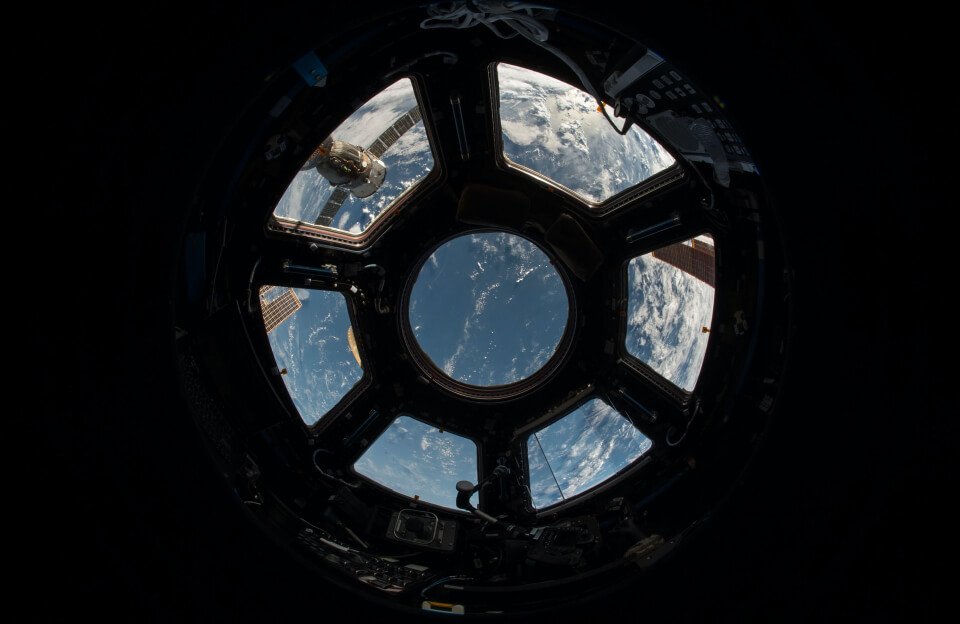
Space: The Final, Eternal Frontier
Space is not merely a place. It is a condition—a vast, silent, and profoundly alien realm that begins just 100 kilometers above our heads, at the Kármán line, yet stretches for billions of light-years in all directions. It is the ultimate canvas upon which the universe paints its grandest spectacles and whispers its deepest secrets.
We perceive it as a void, an eternal, star-sprinkled darkness. But this is an illusion of our senses. Space is a dynamic, seething arena of forces and phenomena. It is filled with the ghosts of ancient light, the gravitational ripples of colliding black holes, invisible fields, and sleets of radiation. It is the birthplace and graveyard of stars, where nebulae—great clouds of dust and gas—act as cosmic cradles for new solar systems. Within it, time and distance achieve scales that defy human intuition, where looking out is also looking back, deep into the past.
For humanity, space has always been a mirror and a goal. It is the realm of mythologies and gods, the home of oracles written in constellations. Then, in a breathtakingly short span of time, it became an arena of exploration. The launch of Sputnik in 1957 ignited a race that, just twelve years later, placed human footprints on the Moon—perhaps our species’ single greatest feat of collective will, curiosity, and engineering.
Today, our relationship with space is undergoing a seismic shift. We are transitioning from an age of exploration by agencies to an era of expansion by humanity. Robotic emissaries—rovers on Mars, probes touching the Sun, telescopes like Webb peering at the edge of time—act as our senses. Meanwhile, the dream of becoming a multi-planetary species is moving from science fiction to corporate business plans. The International Space Station offers a fragile blueprint for sustained life off-world, while the Moon and Mars loom as the next logical, formidable steps.
Yet, space is the harshest of teachers. It is a perfect vacuum that boils bodily fluids and offers no air. It is a deep freeze shadowed from the sun and a blazing furnace exposed to it. It bombards the body with cosmic rays. To survive there requires carrying our entire biosphere with us in a tin can. This fundamental hostility makes every mission an existential triumph of ingenuity over an environment that does not care if we exist.
Ultimately, the significance of space lies in a dual revelation. Outwardly, it is the greatest act of discovery possible. By studying the cosmos, we learn the laws of physics, the origin of the elements in our blood, and the potential fate of all things. We search for answers to our most profound questions: Are we alone? How did this all begin?
Inwardly, however, its greatest gift may be perspective. The iconic “Blue Marble” photograph of Earth, taken from Apollo 17, did more than any doctrine or speech to illustrate our planet’s fragility and unity. Against the infinite black, our world is a tiny, radiant oasis of life—a closed system with no backup. Space shows us both our astounding insignificance in the cosmic scale and the incalculable preciousness of our singular, living planet.
Space is the final frontier not because it is the last we will reach, but because it is the one we will never conquer. It is an endless invitation to look up, to wonder, and to remember that we are, all of us, crew on a small ship sailing through an endless, star-filled sea.
